
パーソナルツール

シンポジウム・各種イベント

2007年7月14日 人工知能・推論に関するセミナー

学術情報メディアセンターでは、来日中の米フロリダ中央大学 ゴンザレス教授ならびに独イルミナウ工科大学クナフ准教授をお招きし、人工知能・推論に関するセミナーを下記の通り開催いたします。皆様方の積極的なご参加をお待ちしております。

開催要項
日時 2007年7月14日(土曜日) 14時00分〜17時00分
場所 京都大学学術情報メディアセンター北館3階 講習室(エレベーター有)
参加費用 無料
参加申込み 不要
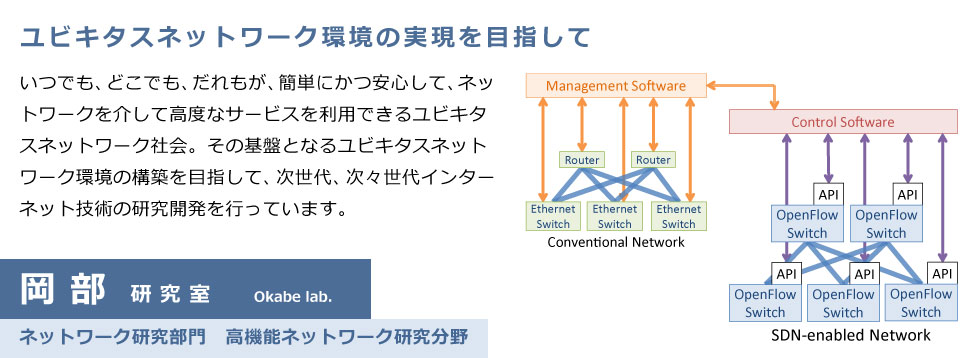
問い合わせ 京都大学学術情報メディアセンター ネットワーク研究部門 高機能ネットワーク研究分野
tel: 075-753-7417 fax: 075-751-0482
email: seminar0707*net.ist.i.kyoto-u.ac.jp
*はアットマークを入れてください
主催 京都大学学術情報メディアセンター
プログラム
14時00分〜15時30分
「Learning Tactical Human Behavior through Observation of Human Performance」
講演者: ゴンザレスア・ベリ−ノ(Avelino Juan Gonzalez) 氏(米 フロリダ中央大学 電気工学・コンピュータサイエンス学部 教授 ディレクター)

It is widely accepted that the difficulty and expense involved in acquiring the knowledge behind tactical behaviors has been one limiting factor in the development of simulated agents representing adversaries and teammates in military and game simulations. Several researchers have addressed this problem with varying degrees of success. The problem mostly lies in the fact that tactical knowledge is difficult to elicit and represent through interactive sessions between the model developer and the subject matter expert. In this lecture, I talk about a novel approach that employs Genetic Programming in conjunction with Context-based Reasoning to evolve tactical agents based upon automatic observation of a human performing a mission on a simulator. Furthermore, I talk about the process used to carry out the learning. A prototype was built to demonstrate feasibility and it is described herein. The prototype was rigorously and extensively tested. The evolved agents exhibited good fidelity to the observed human performance, as well as the capacity to generalize from it.


15時30分〜17時00分
「Storyboarding - An AI Technology to Represent, Process, Evaluate, and Refine Didactic Knowledge」
講演者: クナフ・ライナー(Rainer Knauf) 氏(独 イルミナウ工科大学 計算機科学・自動制御学部 準教授 人工知能講座長)

The current state of affair in learning systems in general and in e-learning in particular suffers from a lack of an explicit and adaptable didactic design. Students complain about the insufficient adaptability to the learners' needs. In particular, university instruction often suffers from a lack of didactic design. Since universities are also research institutions, their professors are usually hired based on their topical skills. Didactic skills are often underestimated in the recruiting process.

Learning content and services need to reach their audience according to their different prerequisites, needs, and different learning conditions. A way to overcome such deficiencies is (semi-)formally representing the didactic design.

Our approach to facing problems like these is a modeling concept for didactic knowledge called Storyboarding. A storyboard, provides a roadmap for a course, ncluding possible detours if certain concepts to be learned need reinforcement. Using modern media technology, a storyboard also plays the role of a server that provides the appropriate content material when deemed required.

A Storyboard is a hyper-media with a hierarchical organization that holds didactic knowledge. The concept is setting the stage to apply Knowledge Engineering Technologies to verify, validate the didactics behind a learning process.

As a vision, didactics can be refined according to revealed weaknesses. Furthermore, successful didactic patterns can be inductively inferred by analyzing the particular knowledge processing and its alleged contribution to learning success. Additionally, ways to further utilize Knowledge Engineering Technologies are outlined.